The problem.
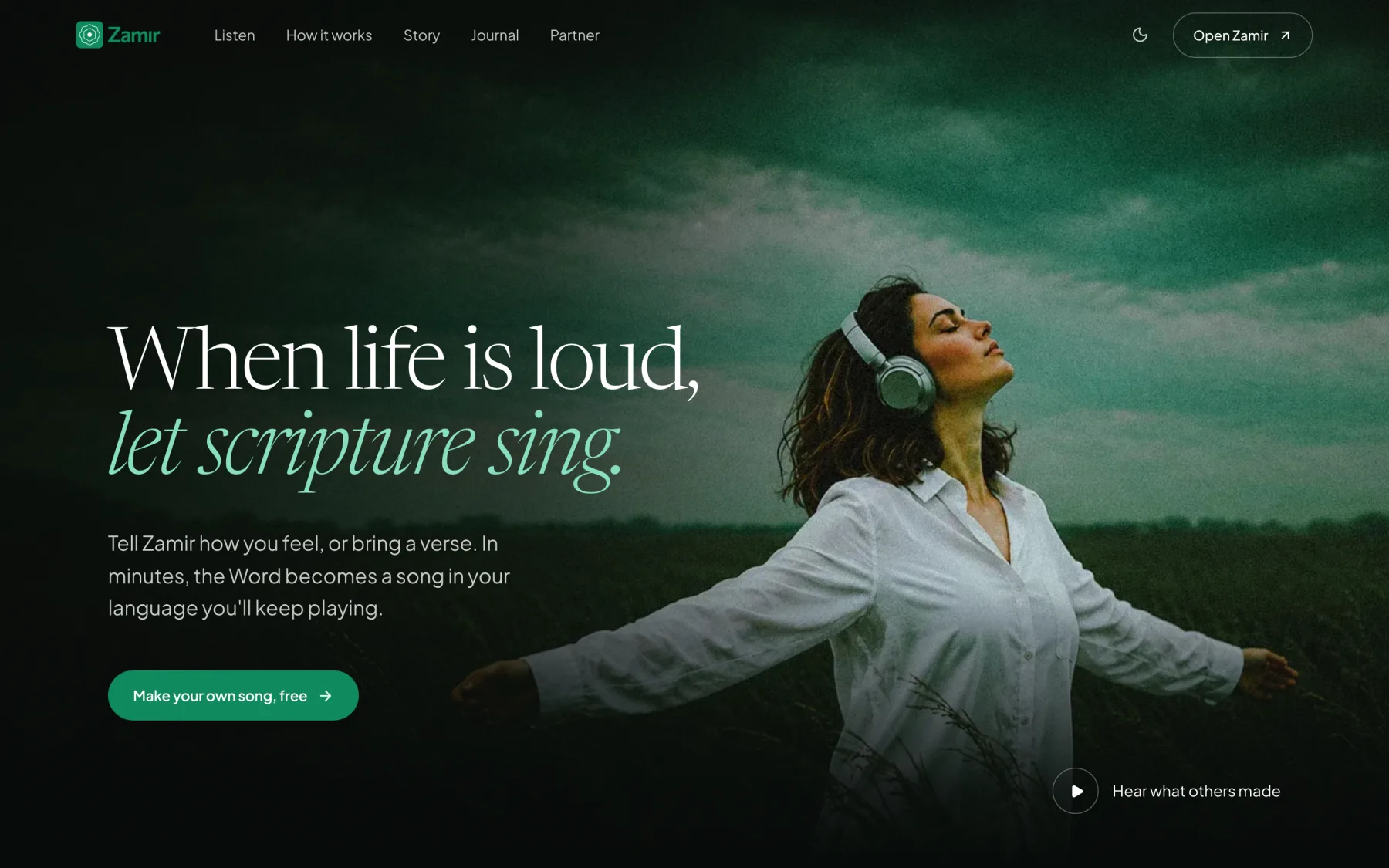
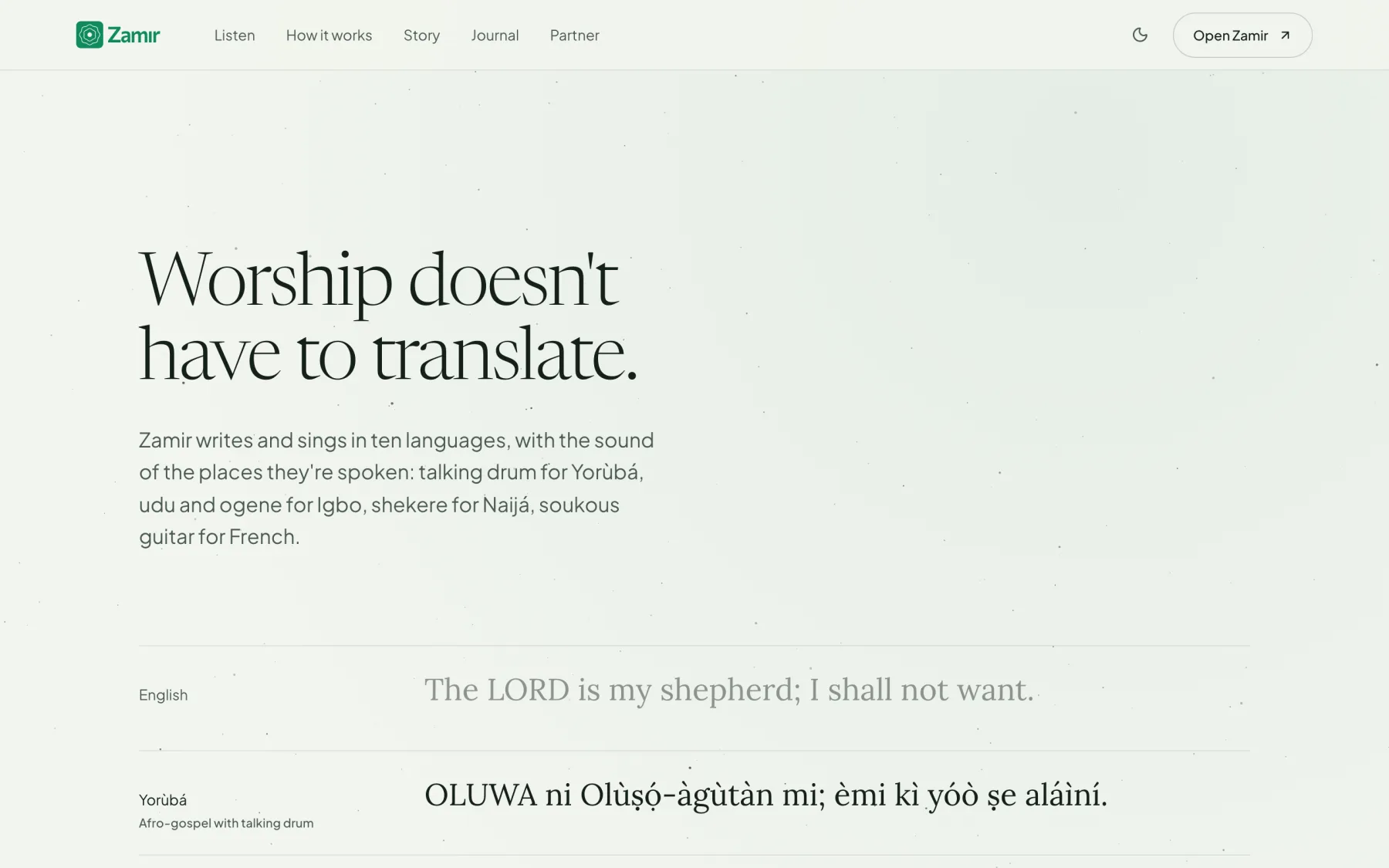
Scripture is easy to read and easy to forget. Songs stick. But writing, producing, and translating a worship song for every verse, in the listener's own language and style, is not something one person can do on demand. For most people in my context, there was also virtually nothing available in Yorùbá, Igbo, Hausa, or Naijá.
The approach.
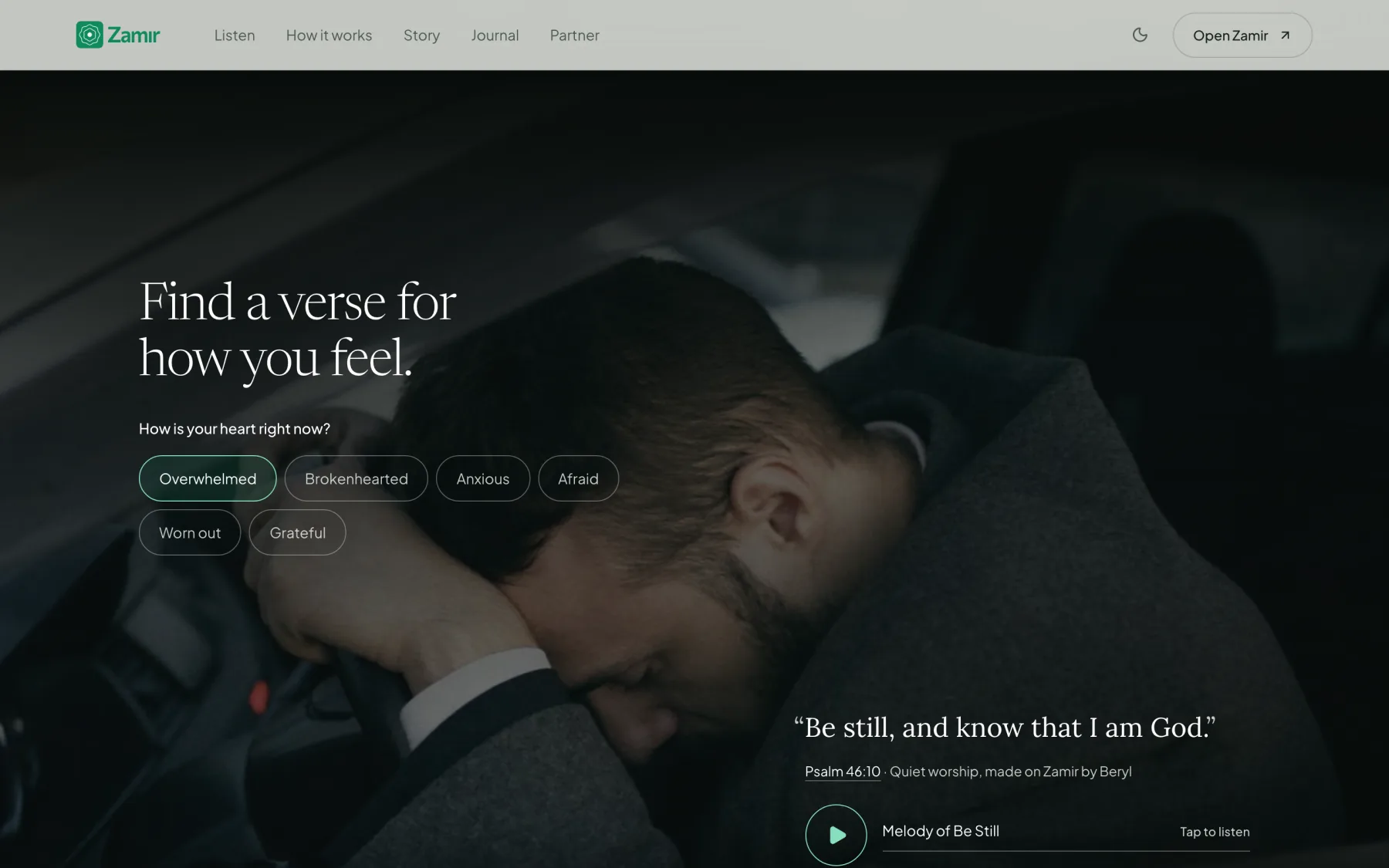
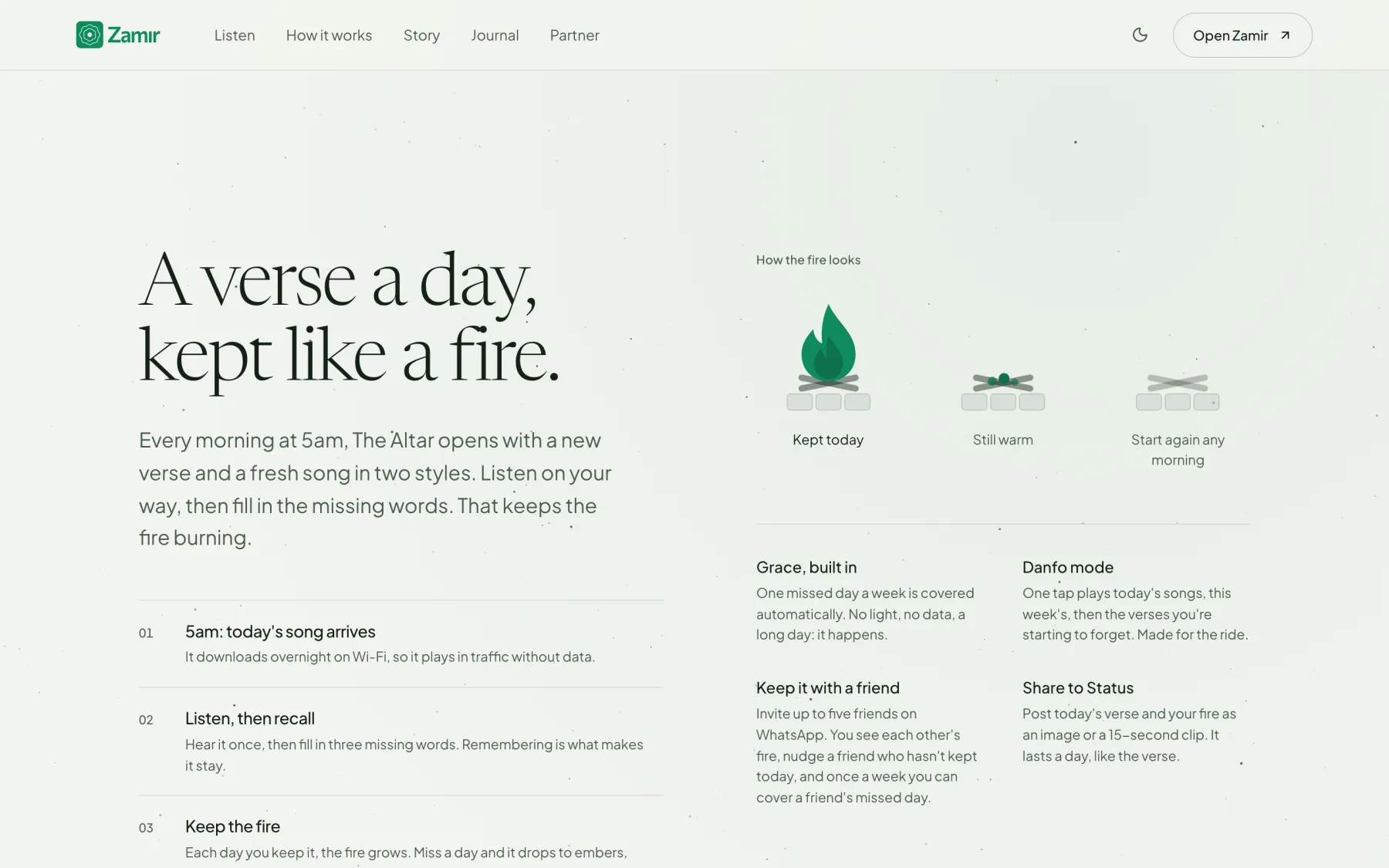
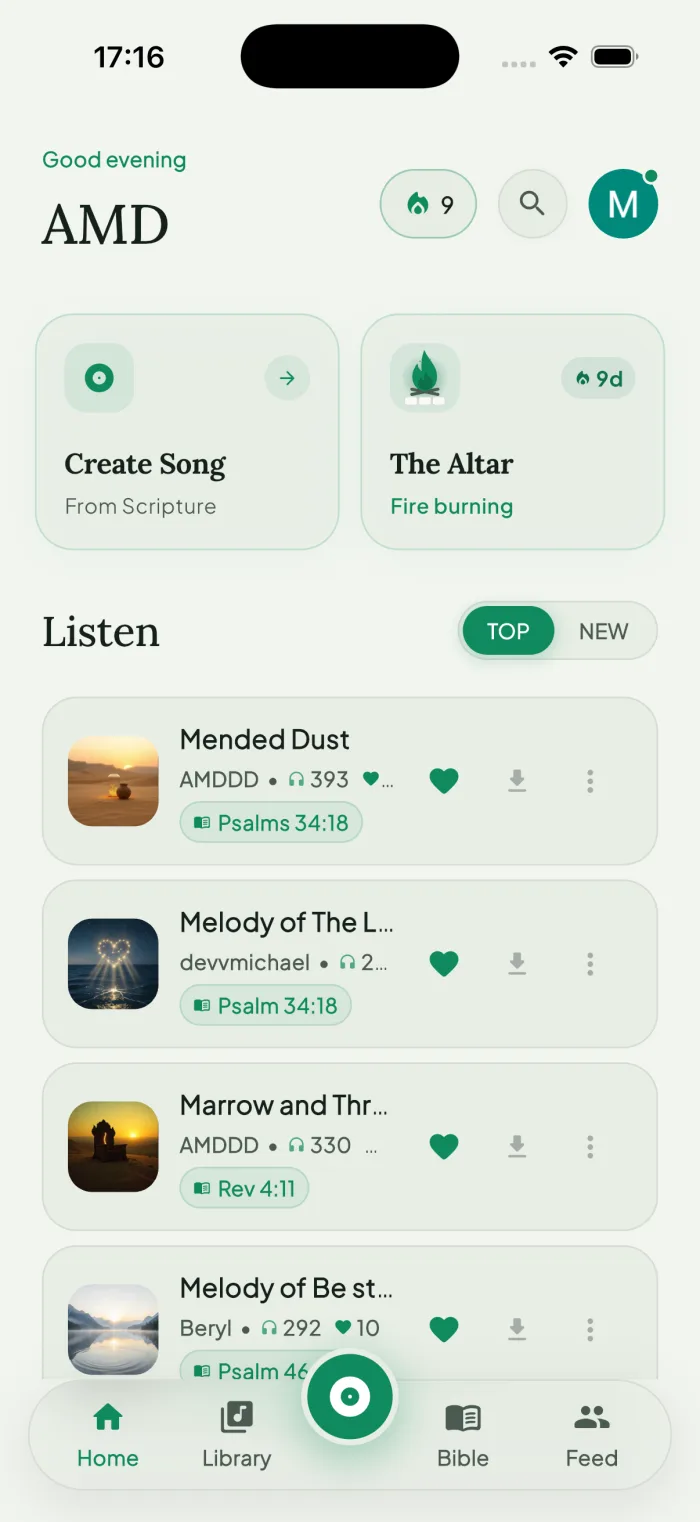
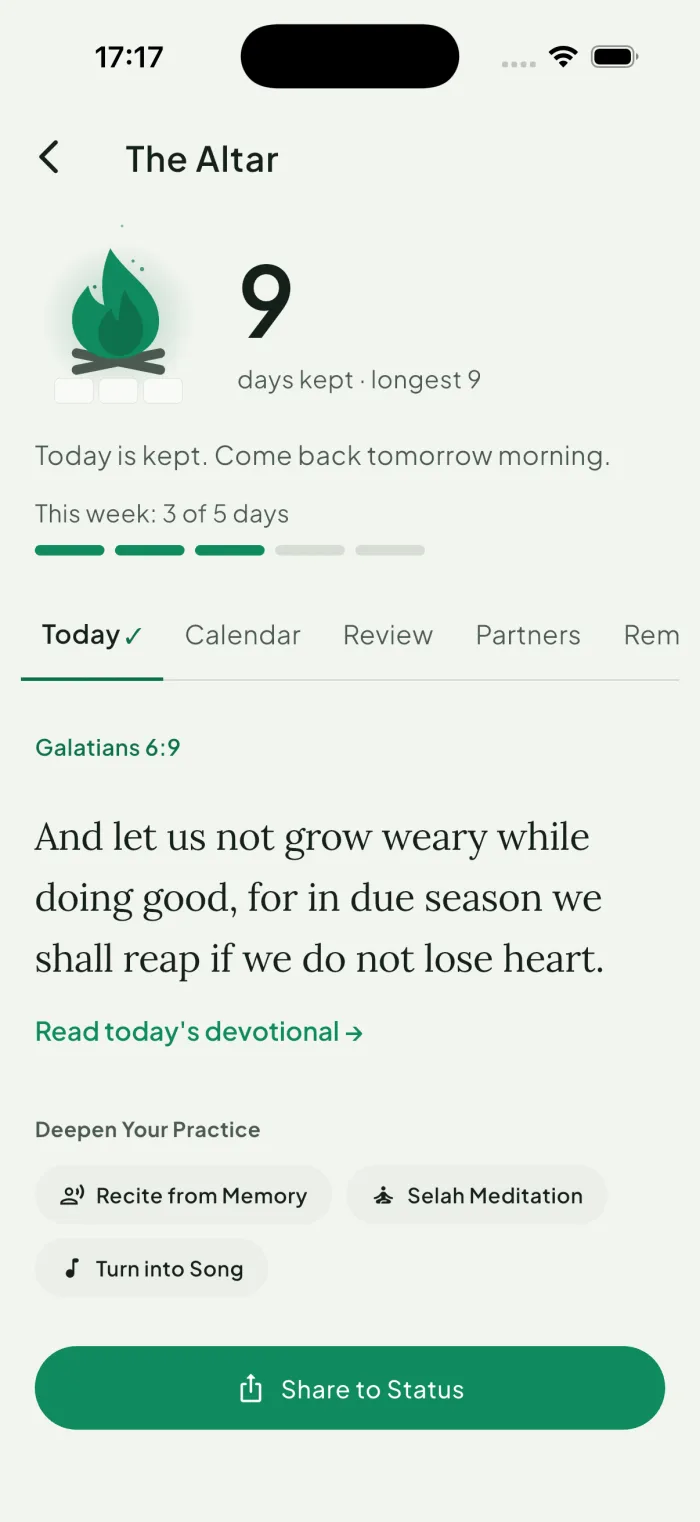
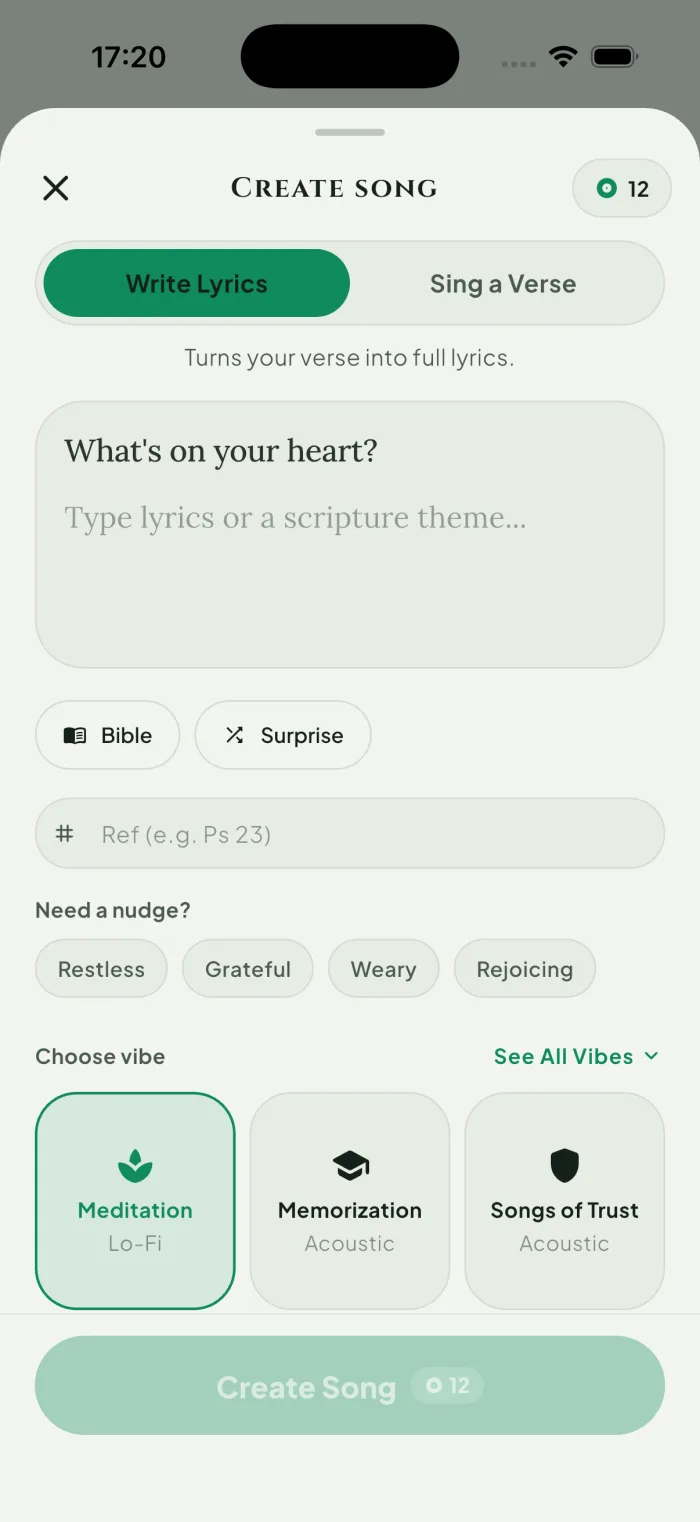
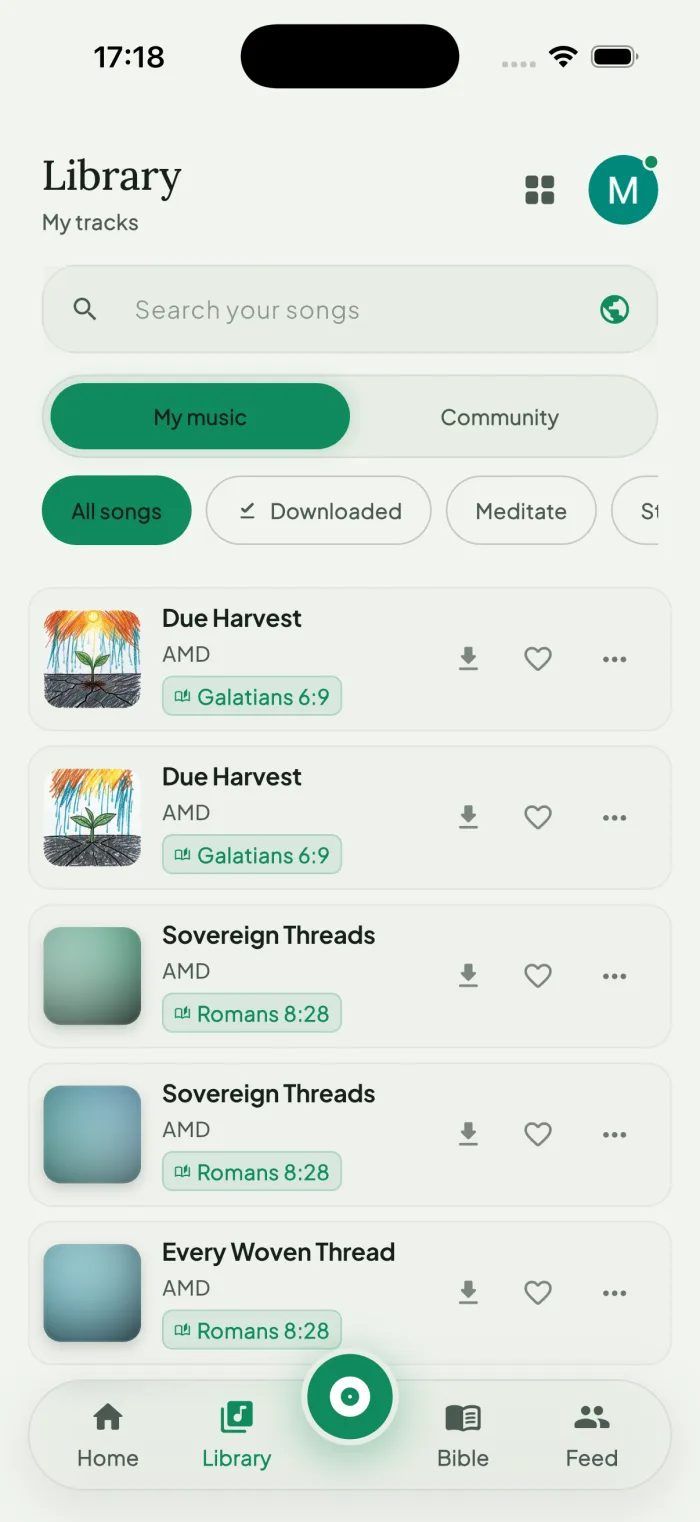
Zamir lets you pick a feeling or paste a passage, choose a style and a language, and get a song back. Around that sits a daily habit: the Altar delivers a new verse and song every morning and asks you to recall three missing words to keep a streak. The product is built so that listening, memorising, and sharing all feel like one loop rather than separate features.
The process.
Designed the product around the daily habit loop first: Soul Check (18 emotional states mapped to verses), generative worship songs (7 styles, 10 languages, 14 translations), read-along memorisation, and the Altar with automated streak forgiveness (one missed day per week covered automatically).
Built the web application in Next.js with TypeScript and the mobile clients in Flutter. Song generation runs through Gemini and specialized audio synthesis models behind backend API routes.
Designed a bounded user credits model to strictly protect unit economics: 4 free credits at sign-up, 1 more every 3 days up to 10 a month, with extra songs for purchase. Public community listening is completely free and requires no account.
Built the product from first commit to production—including the Altar, sharing flows, daily morning emails, and the Journal—collaborating with a small founding team on offline OPFS storage and tooltips.
The screens.
The outcome.
“Every generated song costs real money, so a consumer AI product has to be designed around unit cost from the first day. That is why credits exist, and why exact cost-per-song and failure tracking is the next thing I want to measure properly. It is also what pulled me toward infrastructure: the product questions I care about most are now reliability and cost questions.”