The problem.
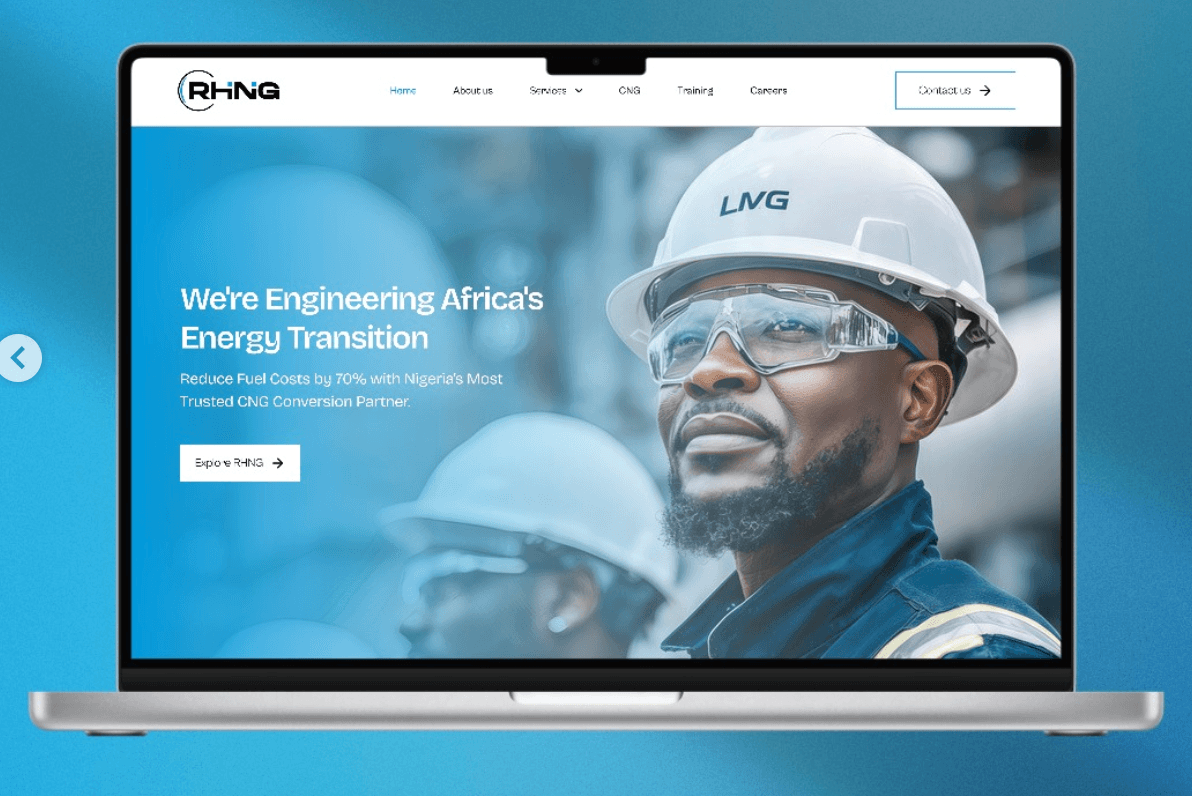
In Nigeria, industrial power is brutal—running heavy diesel generators can eat up to 70% of a plant's operating costs. Natural gas is dramatically cheaper and cleaner, but switching takes serious engineering: cryogenic tanks, pressure skids, and virtual pipelines (CNG/LNG trucking). RHNG needed a web presence that explained these four complex divisions to industrial plant managers, captured quote requests, and ranked on Google without needing an agency on retainer.
The approach.
I took the project from zero to production solo. I structured the frontend in Next.js, TypeScript, and Tailwind, and modeled their four divisions in Sanity CMS so their commercial team could update specs themselves. I wired quote requests to Supabase and Resend, configured Microsoft Clarity to monitor drop-offs, and treated performance and SEO as core engineering requirements.
The process.
Mapped out the user flow for factory owners and plant engineers looking for industrial gas conversions.
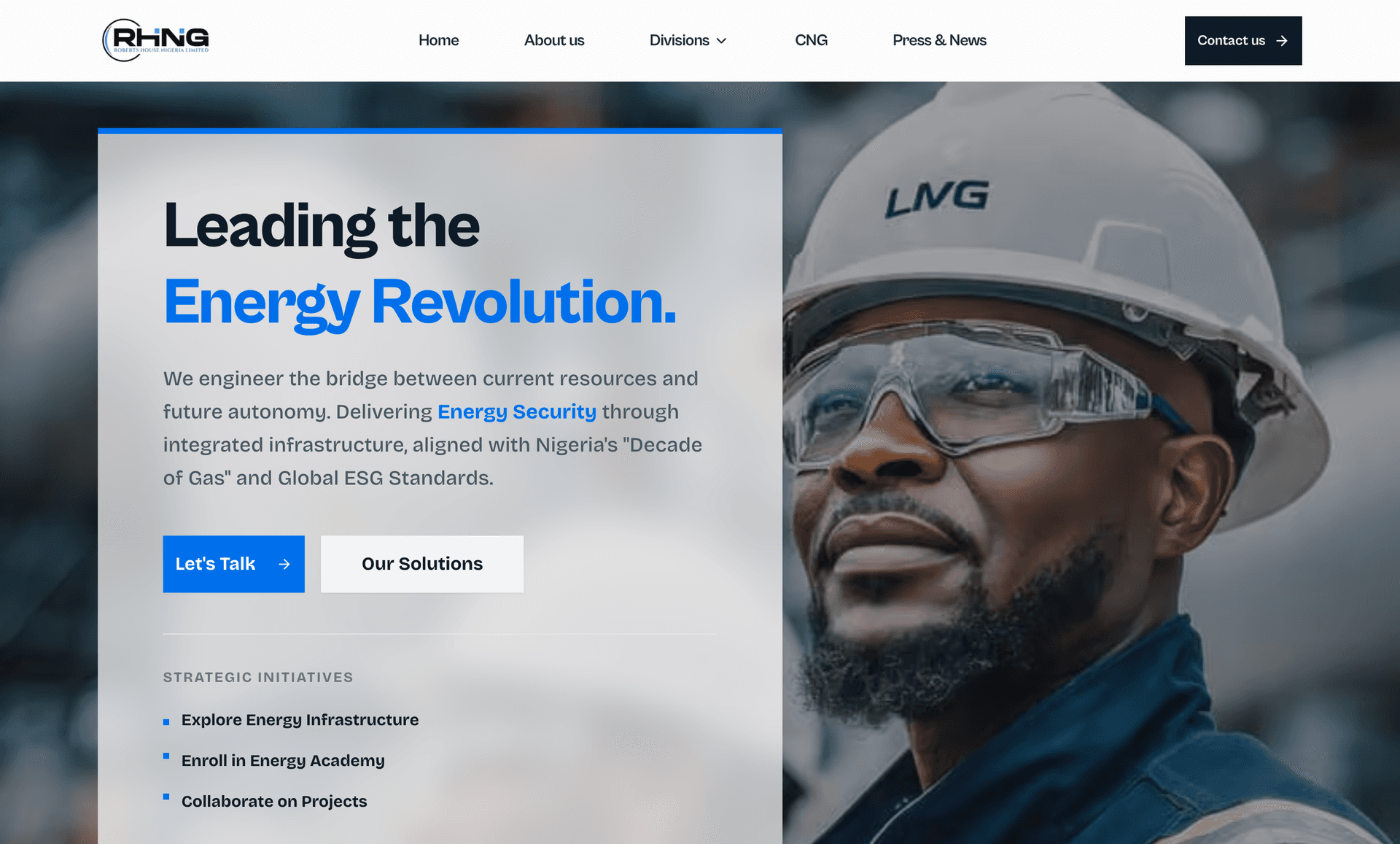
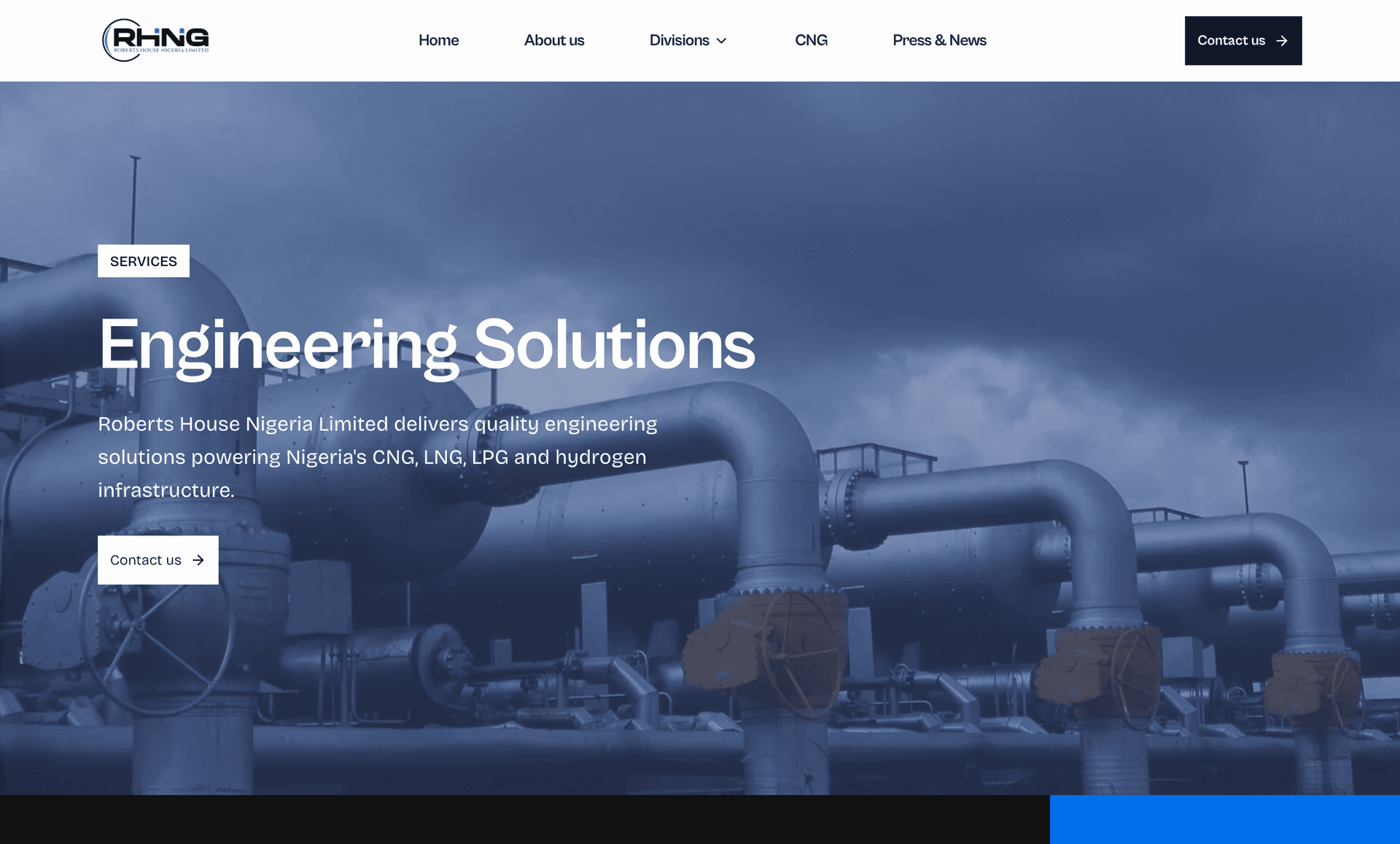
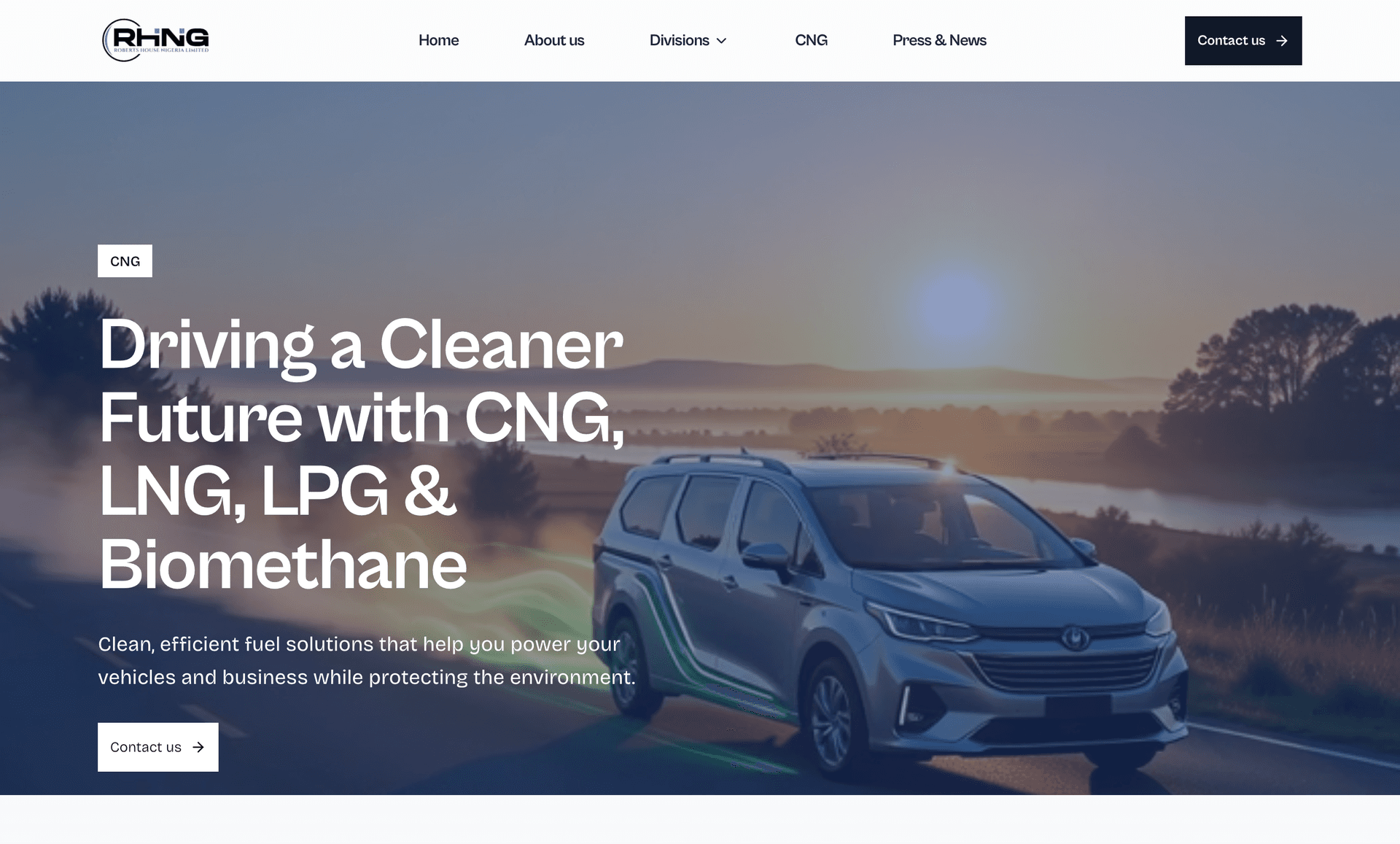
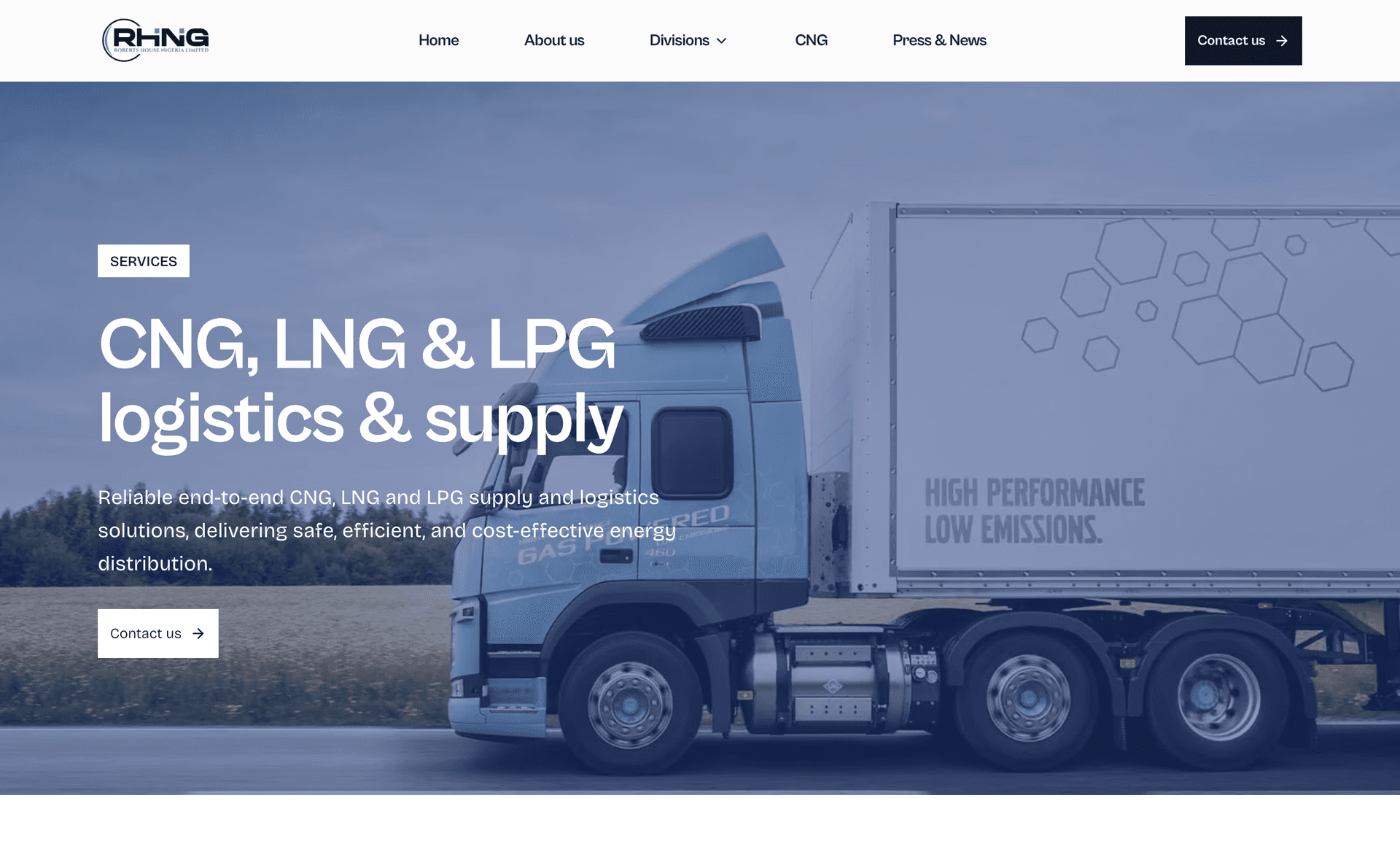
Built the frontend across RHNG's four core divisions: Cryogenic Engineering, Virtual Pipeline Supply (CNG/LNG/LPG), Training Academy, and Energy Consultancy.
Modeled structured content schemas in Sanity CMS so the team could edit service capabilities and case studies without touching Git.
Built endpoints with Supabase for quote storage, Resend for instant email notifications, and Microsoft Clarity for telemetry.
Tuned Core Web Vitals to hit a 100/100 PageSpeed score, helping the site earn 2.5k+ search impressions right after launch.
The screens.
The outcome.
“When you build a client platform solo, there is no one else to blame for a sloppy decision. It reinforced my preference for simple, rock-solid tools—Next.js, typed schemas in Sanity, and managed backends. If a client can operate their own platform without needing me to touch the codebase, I did my job.”